

TRIPASS CORE TECHNOLOGY™
Three Paths. Three Chambers. One Piece of Metal.
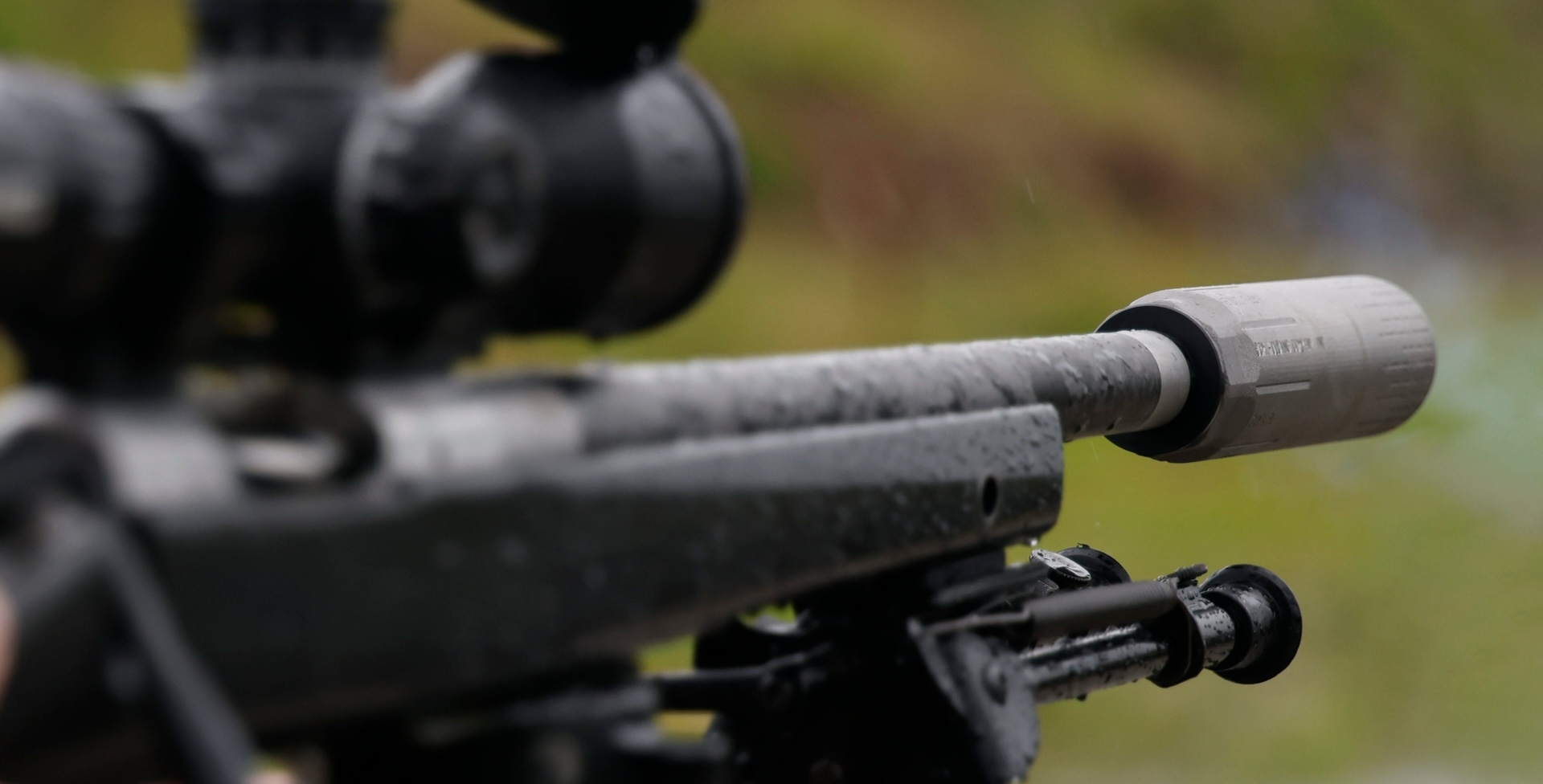
Why A Gunshot Is Loud
Burning powder makes gas — a great deal of it, very hot, under enormous pressure. When the bullet clears the muzzle, that gas follows it out and hits still air faster than the air can move aside. The collision is a shock wave. The shock wave is the boom.
A silencer's job is to get between those two things: give the gas somewhere to expand, time to cool, and room to slow down, so it reaches the atmosphere as a push instead of a punch.
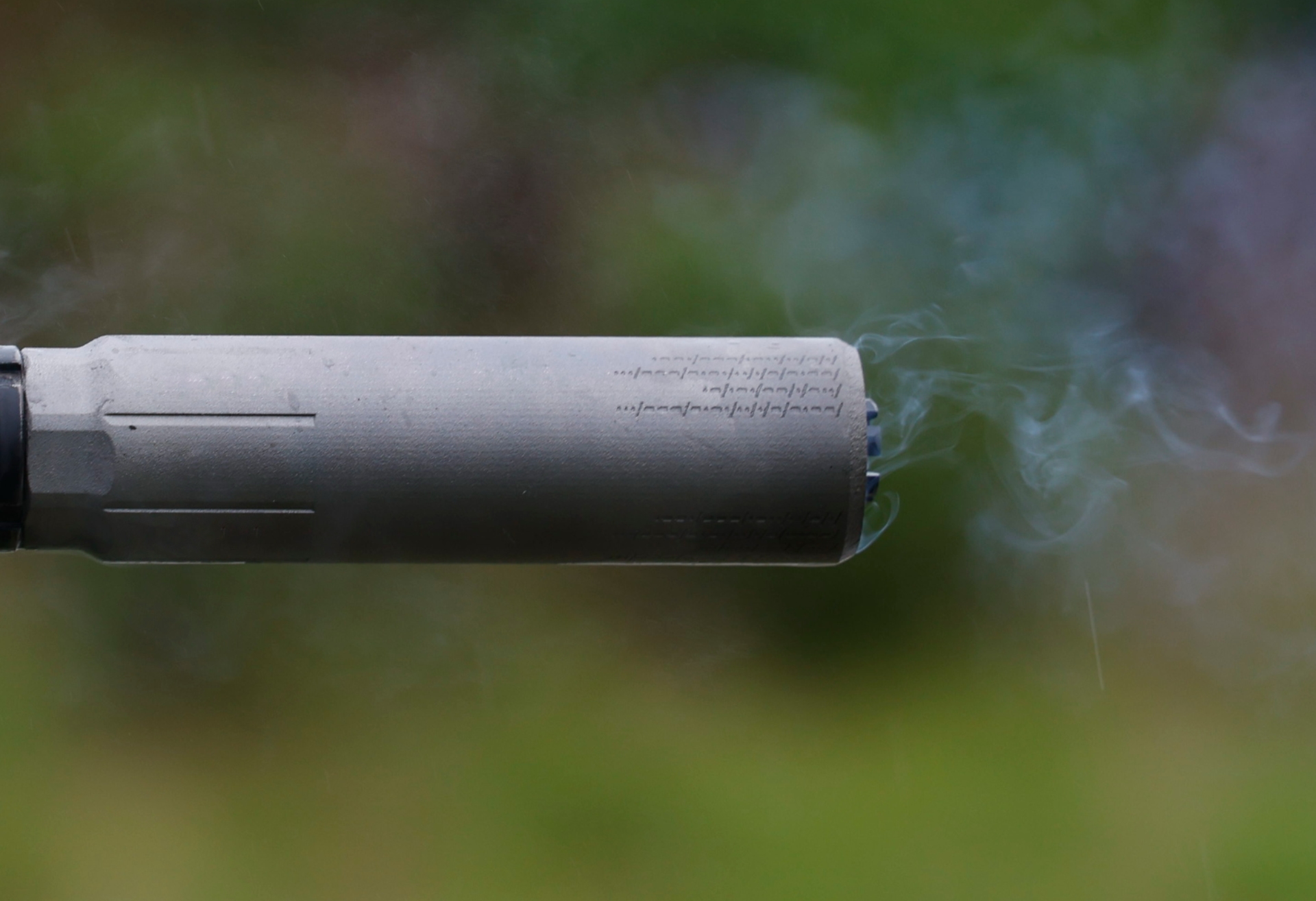
It Comes Down To Gas Retention
Everything else is detail. The longer a silencer holds gas before letting it go, the more heat and pressure it sheds on the way out, and the gentler the exit. Internal volume helps. Path length helps more. What you do with the gas while you have it decides the rest.
The conventional approach is a stack of baffles — cones in series that catch gas and turn it back on itself. It works, and it has worked for ninety years. But it's one route through the silencer, and how much you can complicate that route is bounded by what a cutting tool can reach and by how many separate parts you're willing to align.
Three Paths, Not One
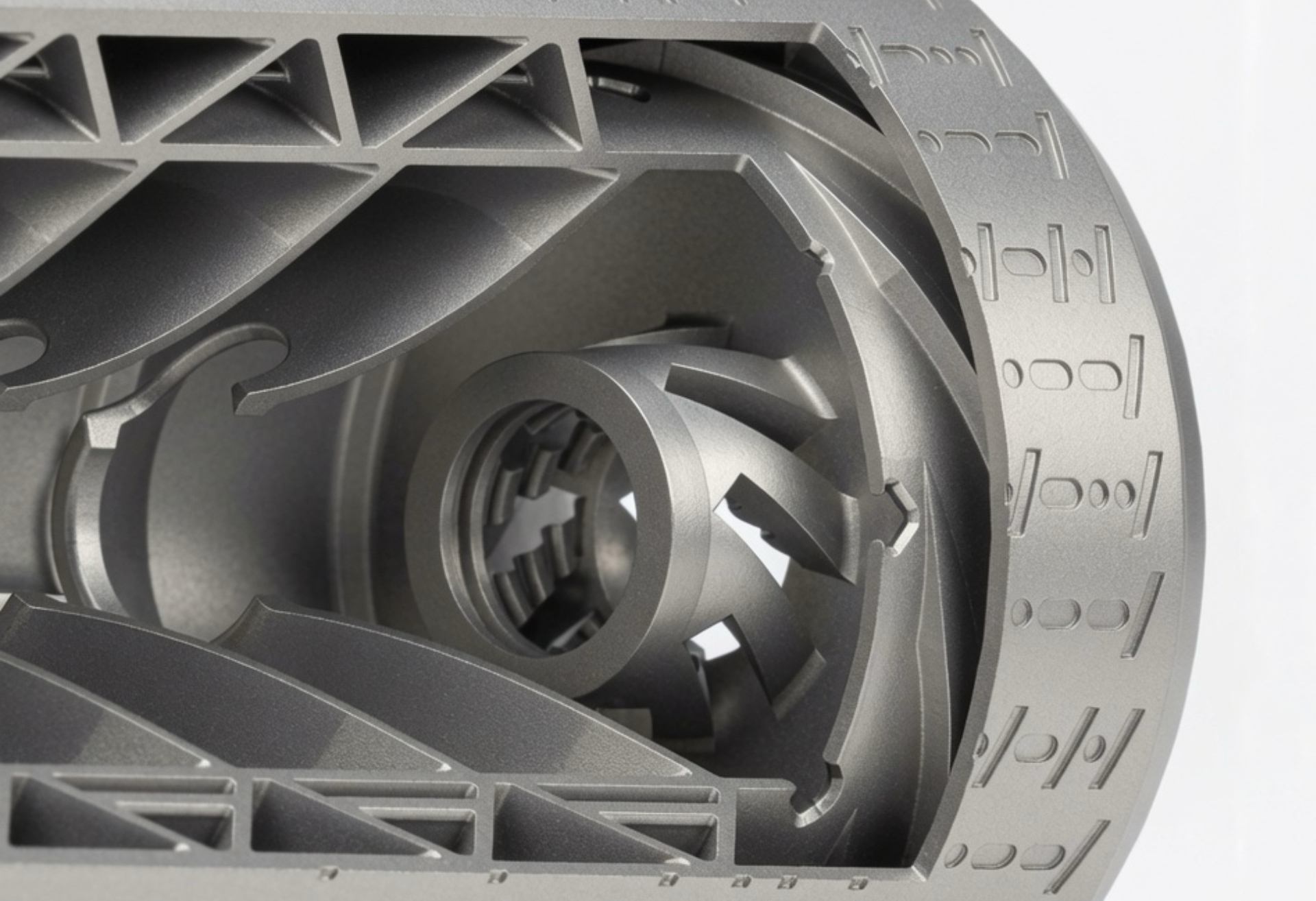
Tripass Core Technology™ splits the gas the moment it enters. A central bore carries the bullet and the column of gas immediately behind it. Two helical channels wind around that bore, drawing gas off and sending it on a longer, slower route through the body.
Those three paths feed a series of expansion and mixing chambers. Inside each, flow is turned back against itself and against gas arriving from the other two paths — fast, hot gas meeting slower, cooler gas and trading energy at every meeting. Counter-rotating blades keep it moving instead of letting it find a straight line to the exit. The result is a much longer journey inside a body of the same length.
Why The Walls Aren't Smooth
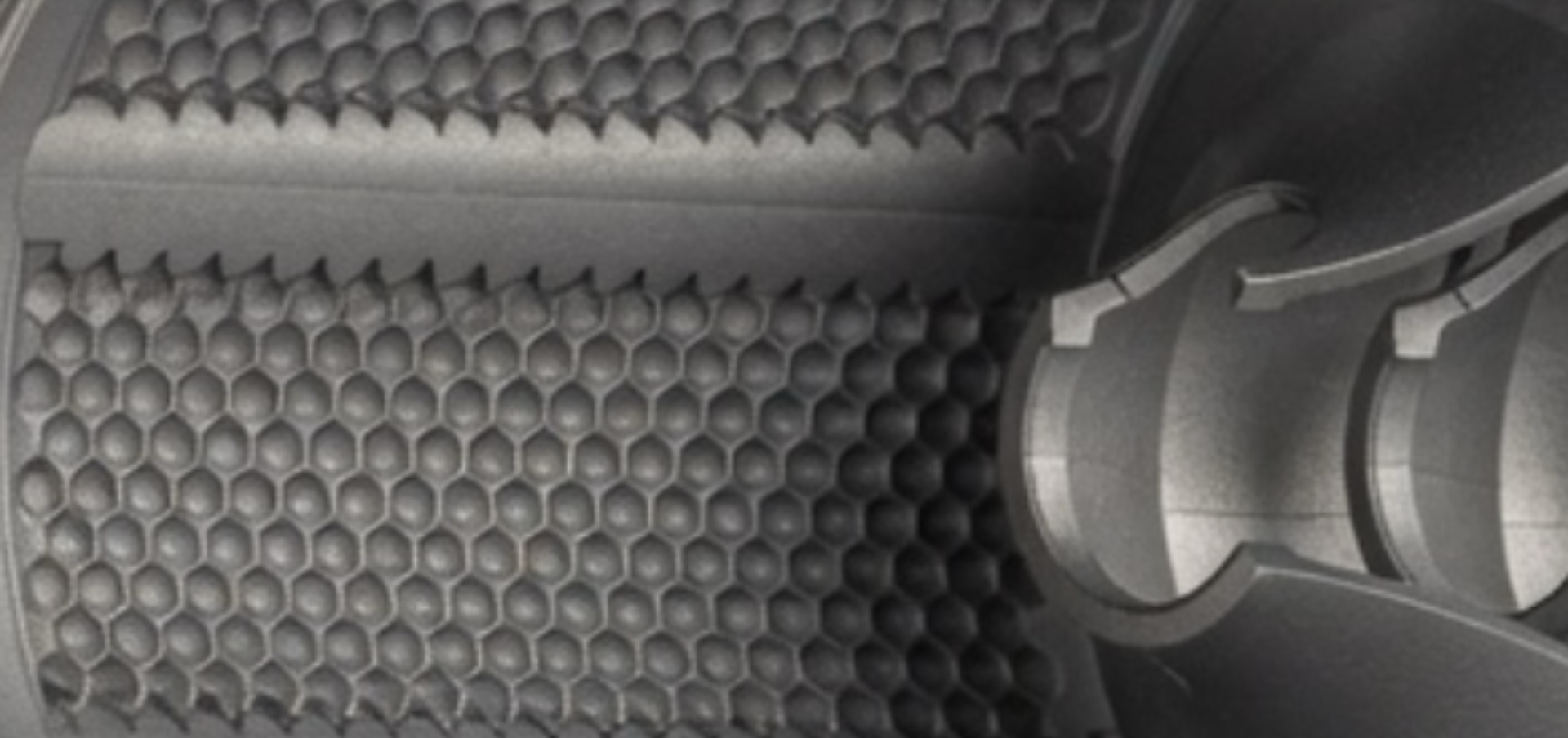
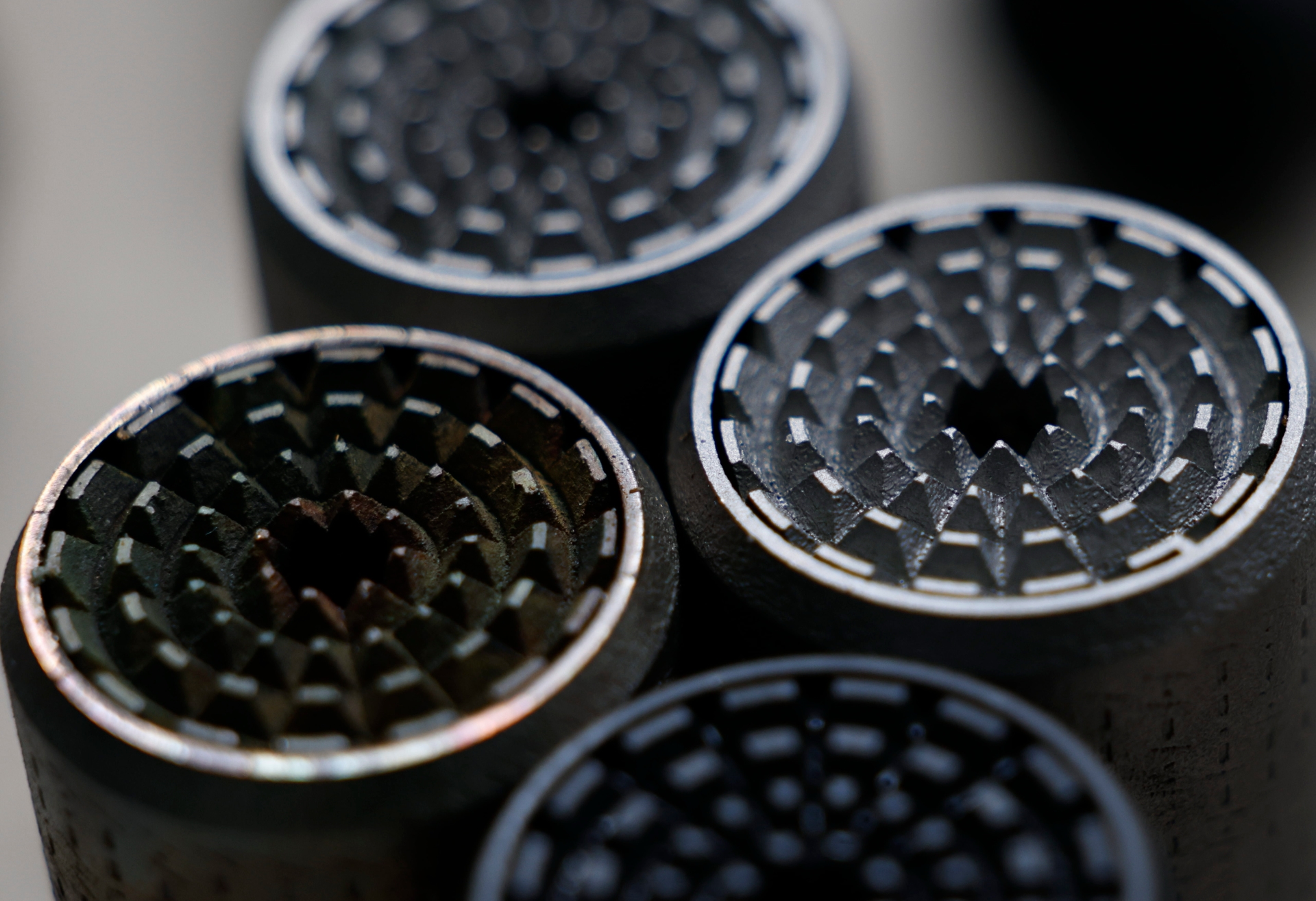
Every internal surface carries Acoustic Golfball Dimpling™ rather than a smooth finish. Each dimple is a small void, and thousands of them add up: enough extra internal volume that a smooth-walled silencer would need roughly another inch and a half of length to match it. More volume in the same envelope means more room for gas to expand — and a deeper, fuller tone on the way out.
Volume is only the first of three things the texture does. It also scatters the reflections that would otherwise come back as a sharp report, and it stiffens the wall enough that the wall can be thinner. The full argument, and why nobody could do it before →
The Last Thing the Gas Touches
The Jet-Turbine Diffuser Endcap™ doesn't simply let gas out of a hole. It disperses and directs the release, spreading it rather than concentrating it — which cuts flash and muzzle signature at the point where both are worst, and sends less gas back into the action while it's at it. The shape is borrowed from a jet engine's exhaust, and on the Huckleberry it threads off so the aperture can change with the host.
Helical channels wrapped around a central bore, feeding chambers with blades inside them, is not a shape you can cut. It isn't a shape you can assemble either, without introducing a joint at every transition and a tolerance error at every joint.
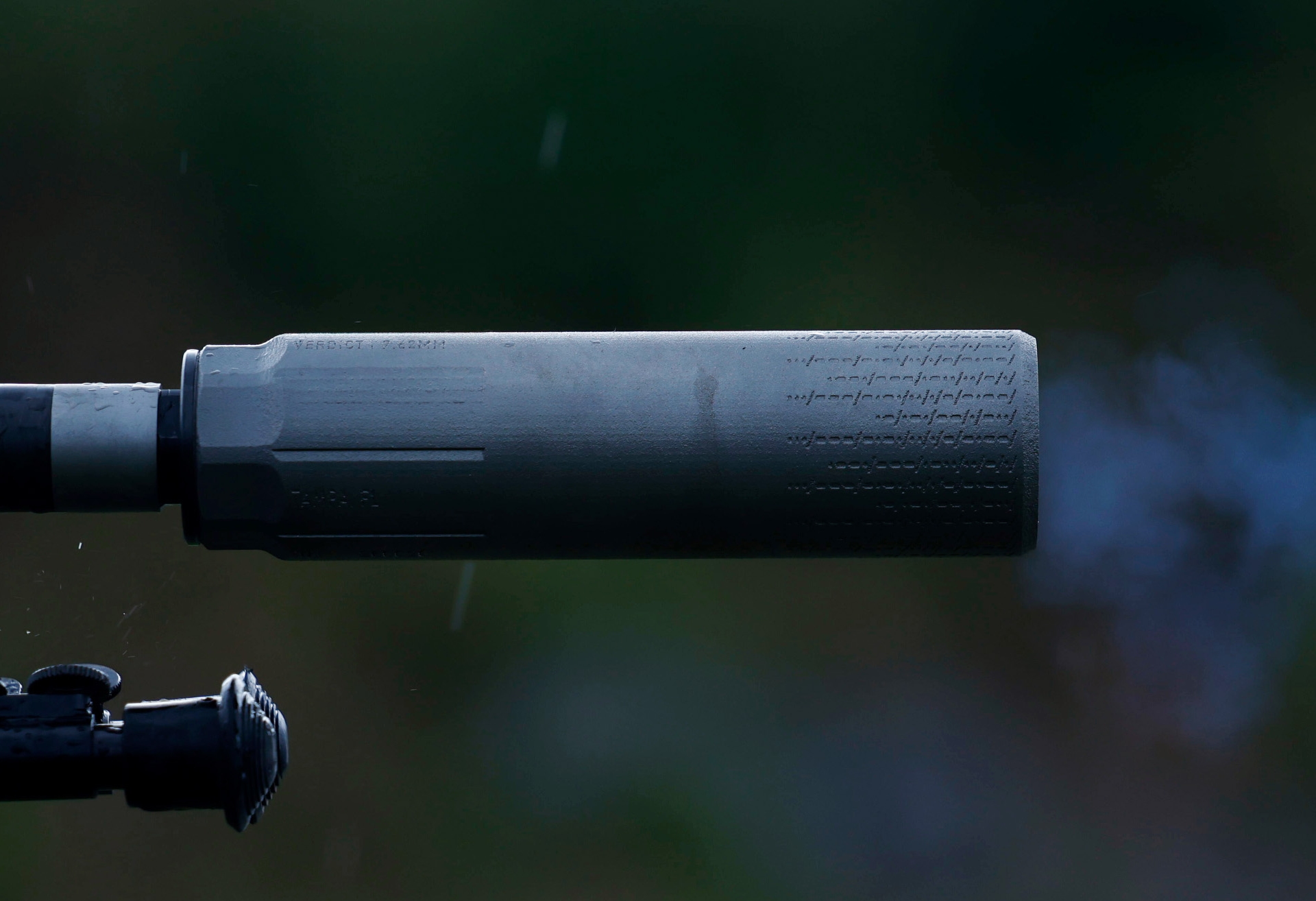
Every Polite Society silencer is formed as a single continuous piece by laser powder bed fusion. The geometry isn't a feature we added to the manufacturing method — it's the reason we use it. How that's done →
What It Adds Up To
Quieter: More of the gas's energy is spent inside the silencer instead of in the air beside your head.
Less Flash: Cooler gas, released deliberately, has less to burn on the way out.
Less Gas in Your Face: Gas that takes the long way forward is gas that isn't backing up toward you.
Cooler Running: Heat shed across three paths and three chambers is heat that isn't concentrated in one place.
The Part Nobody Tells You
A silencer works on the muzzle blast. It does not work on the bullet.
Anything travelling faster than sound drags a small sonic boom along behind it, and that crack happens downrange — after the bullet has left, well beyond anything a silencer can reach. No design changes it, ours included. It's why the same silencer sounds like a different instrument with subsonic ammunition, and why rimfire sounds like a different category altogether.
We'd rather tell you that than have you find out at the range.
Titanium or Inconel 625
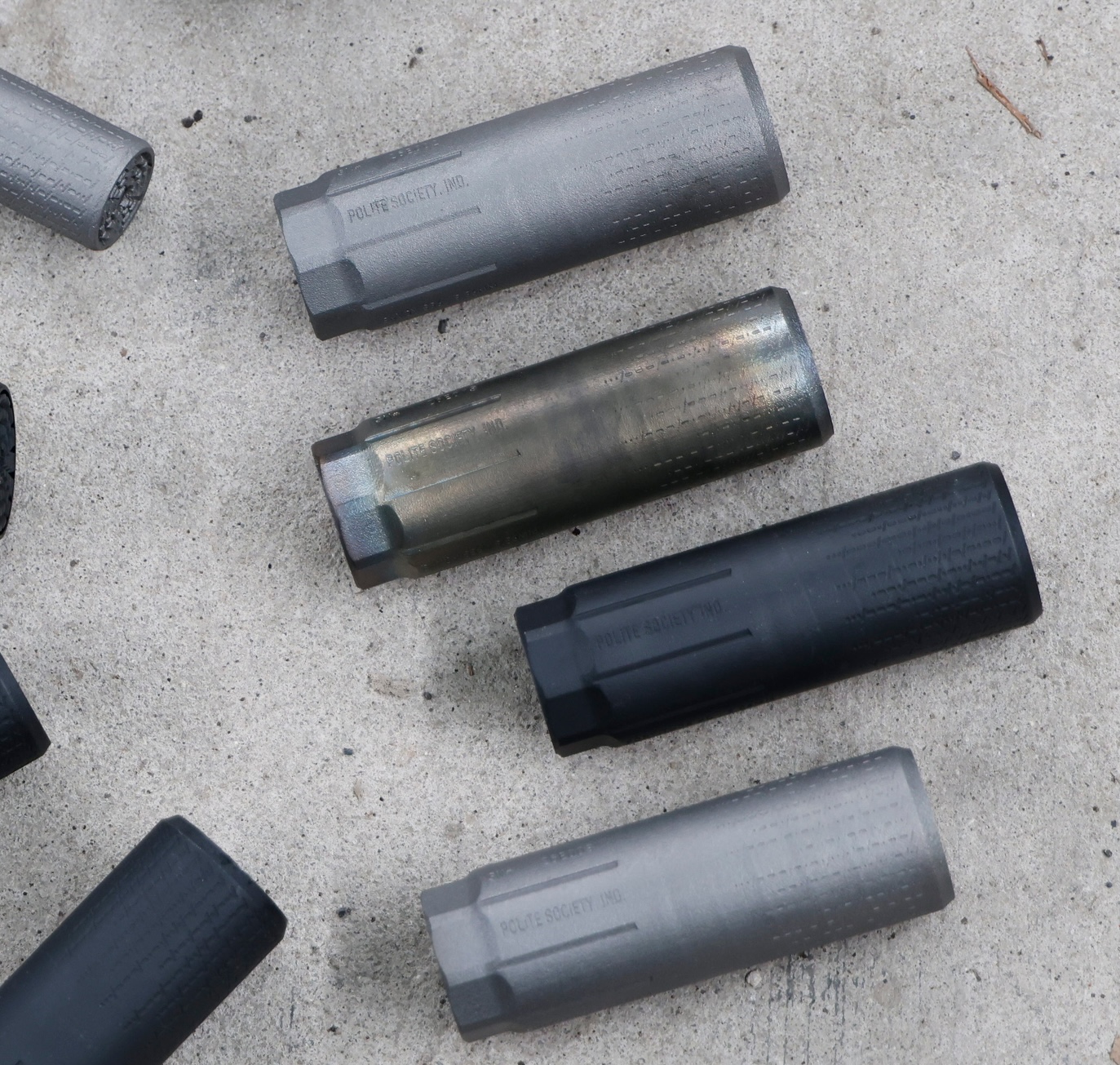
The core geometry is identical in both — same three paths, same chambers, same dimpled walls. You aren't choosing between a good silencer and a better one, but between two metals. On the Fortitude 5.56 and the Verdict 7.62, the choice is yours.
Grade-5 Titanium (6Al-4V) is the one you carry. Roughly half the density of a nickel superalloy — our 5.56 runs 6.40 oz. against 11.50 oz. in Inconel 625. Five ounces at the muzzle changes how a rifle points and how it feels late in the day. Type-2 hard-coat anodized, and equal to anything an ordinary day asks of it.
Inconel 625 is the one you work. A nickel-chromium superalloy from the family used in the hot sections of jet engines, it holds strength where titanium begins to give ground. Built for long strings and a barrel that gets genuinely hot. It ships finished in Cerakote — a ceramic coating that takes heat and abrasion without letting go.
Most people are well served by titanium. If you're unsure, it's titanium — and if you'd rather not take that on faith, here's what each metal actually is, and how to tell which one you are.